
Blog commenting sites are blogs that let you leave a comment on their posts, usually with your name, email and a link to your website.
WordPress powers about 43% of all websites, according to W3Techs, and comments are switched on in WordPress by default. That makes blog commenting one of the easiest ways to join conversations in your niche. But it’s also a magnet for spam. Akismet, WordPress’s spam filter, has blocked more than 500 billion spam comments, so only helpful, genuine comments get approved.
The best blog commenting sites in 2026 are active, niche-relevant blogs with real readers and moderated comments, such as WPBeginner, Smashing Magazine, Neil Patel’s blog, DEV Community and Medium.
Below is our updated blog commenting sites list for 2026, with DA scores, the top 10 high DA blogs, dofollow and instant approval options, and a simple way to do blog commenting for SEO without looking like spam.
Free Blog Commenting Sites List 2026 (With DA)
Here is our full blog comment list for 2026, sorted by Domain Authority (DA). It covers marketing, tech, business, education, health and lifestyle blogs, so you can pick blog commenting websites that match your niche.
| S. No. | Website Names | Domain Authority |
|---|---|---|
| 1 | blog.youtube.com | 100 |
| 2 | blogger.com | 99 |
| 3 | blog.linkedin.com | 99 |
| 4 | backlinko.com | 98 |
| 5 | blog.github.com | 96 |
| 6 | blog.facebook.com | 96 |
| 7 | shopify.com/blog | 95 |
| 8 | medium.com/tag/business | 95 |
| 9 | blog.meta.com | 95 |
| 10 | forbes.com/sites | 94 |
| 11 | blog.adobe.com/creativecloud | 94 |
| 12 | blog.tumblr.com | 94 |
| 13 | blog.twitter.com | 94 |
| 14 | blog.pinterest.com | 94 |
| 15 | webmd.com/blog | 94 |
| 16 | gsb.stanford.edu/insights | 93 |
| 17 | blogs.cornell.edu | 93 |
| 18 | blogs.harvard.edu | 93 |
| 19 | blog.zoom.us | 93 |
| 20 | blogs.berkeley.edu | 93 |
| 21 | blogs.mit.edu | 93 |
| 22 | blog.stanford.edu | 93 |
| 23 | sites.harvard.edu | 93 |
| 24 | blogs.oracle.com | 93 |
| 25 | blog.godaddy.com | 93 |
| 26 | blog.instagram.com | 93 |
| 27 | blog.netflix.com | 93 |
| 28 | blog.airbnb.com | 93 |
| 29 | mayoclinic.org/healthy-lifestyle | 93 |
| 30 | hbr.org | 92 |
| 31 | entrepreneur.com/latest | 92 |
| 32 | sites.psu.edu | 92 |
| 33 | inc.com | 92 |
| 34 | fastcompany.com | 92 |
| 35 | hubspot.com/blog | 92 |
| 36 | blog.yale.edu | 92 |
| 37 | blog.hubspot.com/marketing | 92 |
| 38 | blog.dropbox.com | 92 |
| 39 | blog.paypal.com | 92 |
| 40 | blogs.princeton.edu | 92 |
| 41 | blogs.columbia.edu | 92 |
| 42 | blog.canva.com | 92 |
| 43 | blog.weebly.com | 92 |
| 44 | blog.hubspot.com/sales | 92 |
| 45 | blog.tiktok.com | 92 |
| 46 | blog.tesla.com | 92 |
| 47 | blog.nvidia.com | 92 |
| 48 | hubspot.com/blog | 92 |
| 49 | healthline.com/nutrition | 92 |
| 50 | psychologytoday.com/blog | 92 |
| 51 | blogs.ubc.ca | 91 |
| 52 | sites.northwestern.edu | 91 |
| 53 | sites.uci.edu | 91 |
| 54 | sites.ucla.edu | 91 |
| 55 | blogs.nyu.edu | 91 |
| 56 | blogs.cisco.com | 91 |
| 57 | blog.bluehost.com | 91 |
| 58 | blogs.duke.edu | 91 |
| 59 | blog.spotify.com | 91 |
| 60 | elegantthemes.com | 90 |
| 61 | moz.com/blog | 90 |
| 62 | blogs.oregonstate.edu | 90 |
| 63 | smashingmagazine.com | 90 |
| 64 | blogs.uoregon.edu | 90 |
| 65 | blog.notion.so | 90 |
| 66 | blog.hostgator.com | 90 |
| 67 | blogs.unc.edu | 90 |
| 68 | blogs.cmu.edu | 90 |
| 69 | blog.intel.com | 90 |
| 70 | elementor.com/blog | 90 |
| 71 | moz.com/blog | 90 |
| 72 | smashingmagazine.com | 90 |
| 73 | healthresource4u.com | 90 |
| 74 | businessinsider.in | 89 |
| 75 | searchengineland.com | 89 |
| 76 | blogs.umass.edu | 89 |
| 77 | blog.evernote.com | 89 |
| 78 | blogs.iu.edu | 89 |
| 79 | blog.docker.com | 89 |
| 80 | blog.siteground.com | 89 |
| 81 | sites.dartmouth.edu | 89 |
| 82 | blog.uber.com | 89 |
| 83 | searchengineland.com | 89 |
| 84 | marketingland.com | 88 |
| 85 | blog.trello.com | 88 |
| 86 | blog.autodesk.com | 88 |
| 87 | blog.namecheap.com | 88 |
| 88 | blog.wix.com | 88 |
| 89 | blogs.brown.edu | 88 |
| 90 | blog.zoho.com | 88 |
| 91 | blog.openai.com | 88 |
| 92 | blog.amd.com | 88 |
| 93 | yoast.com/seo-blog | 88 |
| 94 | blog.wix.com | 88 |
| 95 | blog.zoho.com | 88 |
| 96 | mindbodygreen.com | 88 |
| 97 | menshealth.com | 88 |
| 98 | blogs.vmware.com | 87 |
| 99 | blog.unity.com | 87 |
| 100 | self.com/story | 87 |
| 101 | blog.stripe.com | 86 |
| 102 | blog.unrealengine.com | 86 |
| 103 | blog.squarespace.com | 86 |
| 104 | searchenginejournal.com | 86 |
| 105 | blog.squarespace.com | 86 |
| 106 | womenshealthmag.com | 86 |
| 107 | verywellhealth.com | 86 |
| 108 | copyblogger.com | 85 |
| 109 | blog.asana.com | 85 |
| 110 | blog.heroku.com | 85 |
| 111 | css-tricks.com | 85 |
| 112 | blog.figma.com | 85 |
| 113 | blog.webflow.com | 85 |
| 114 | blog.blender.org | 85 |
| 115 | blog.dreamhost.com | 85 |
| 116 | blog.marketo.com | 85 |
| 117 | blog.deepmind.com | 85 |
| 118 | css-tricks.com | 85 |
| 119 | blog.marketo.com | 85 |
| 120 | blog.aweber.com | 85 |
| 121 | greatist.com | 85 |
| 122 | prevention.com | 85 |
| 123 | verywellfit.com | 85 |
| 124 | smallbiztrends.com | 84 |
| 125 | neilpatel.com/blog | 84 |
| 126 | dev.to | 84 |
| 127 | blog.slack.com | 84 |
| 128 | blog.twilio.com | 84 |
| 129 | sitepoint.com/blog | 84 |
| 130 | sitepoint.com/blog | 84 |
| 131 | wellandgood.com | 84 |
| 132 | problogger.com/blog | 83 |
| 133 | backlinko.com | 83 |
| 134 | wpbeginner.com | 83 |
| 135 | problogger.com/blog | 83 |
| 136 | wpbeginner.com | 83 |
| 137 | shape.com | 83 |
| 138 | ahrefs.com/blog | 82 |
| 139 | semrush.com/blog | 82 |
| 140 | wpmudev.com/blog | 82 |
| 141 | alistapart.com | 82 |
| 142 | blog.typeform.com | 82 |
| 143 | blog.sketch.com | 82 |
| 144 | ahrefs.com/blog | 82 |
| 145 | semrush.com/blog | 82 |
| 146 | blog.activecampaign.com | 82 |
| 147 | seths.blog | 81 |
| 148 | blackenterprise.com/business | 81 |
| 149 | yoast.com/blog | 81 |
| 150 | allbusiness.com | 80 |
| 151 | buffer.com/blog | 80 |
| 152 | blog.okta.com | 80 |
| 153 | blog.atom.io | 80 |
| 154 | blog.invisionapp.com | 80 |
| 155 | blog.pipedrive.com | 80 |
| 156 | blog.anthropic.com | 80 |
| 157 | copyblogger.com | 80 |
| 158 | blog.pipedrive.com | 80 |
| 159 | fitnessmagazine.com | 80 |
| 160 | drweil.com | 80 |
| 161 | socialmediaexaminer.com | 79 |
| 162 | themeisle.com/blog | 79 |
| 163 | themeisle.com/blog | 79 |
| 164 | contentmarketinginstitute.com/blog | 78 |
| 165 | advancedcustomfields.com/blog | 78 |
| 166 | problogger.net | 78 |
| 167 | blog.framer.com | 78 |
| 168 | blog.freshworks.com | 78 |
| 169 | androidcommunity.com | 78 |
| 170 | blog.convertkit.com | 78 |
| 171 | blog.klaviyo.com | 78 |
| 172 | convinceandconvert.com | 77 |
| 173 | tim.blog | 76 |
| 174 | helpscout.com/blog | 76 |
| 175 | kissmetrics.com/blog | 76 |
| 176 | blog.kissmetrics.io | 76 |
| 177 | thrivehive.com/blog | 76 |
| 178 | serenityyou.com | 76 |
| 179 | businessnewsdaily.com | 75 |
| 180 | springwise.com | 75 |
| 181 | okdork.com | 75 |
| 182 | managewp.com/blog | 75 |
| 183 | blog.prototypr.io | 75 |
| 184 | blog.close.com | 75 |
| 185 | blog.close.com | 75 |
| 186 | quick sprout.com | 74 |
| 187 | growmap.com | 73 |
| 188 | speckyboy.com | 73 |
| 189 | speckyboy.com | 73 |
| 190 | practicalecommerce.com | 72 |
| 191 | torquemag.io | 72 |
| 192 | smartblogger.com | 72 |
| 193 | quicksprout.com/blog | 72 |
| 194 | smartblogger.com | 72 |
| 195 | blog.omnisend.com | 72 |
| 196 | wptavern.com | 71 |
| 197 | wptavern.com | 71 |
| 198 | bloggingwizard.com | 70 |
| 199 | poststatus.com | 70 |
| 200 | webdesignerwall.com | 70 |
| 201 | dailyblogtips.com | 70 |
| 202 | bloggingwizard.com | 70 |
| 203 | blogtyrant.com | 69 |
| 204 | bloggingtips.com | 68 |
| 205 | neilpatel.com/blog | 68 |
| 206 | bruceclay.com/blog | 66 |
| 207 | growmap.com | 65 |
| 208 | techspot.com | 65 |
| 209 | gizmodo.com | 65 |
| 210 | thankyourskin.com | 65 |
| 211 | bloggerspassion.com | 62 |
| 212 | smartpassiveincome.com/blog | 62 |
| 213 | hubstaff.com/blog | 61 |
| 214 | basicblogtips.com | 60 |
| 215 | geeky-gadgets.com | 60 |
| 216 | techlila.com | 60 |
| 217 | online-tech-tips.com | 59 |
| 218 | blogengage.com | 58 |
| 219 | weightlosstriumph.com | 57 |
| 220 | inspireto thrive.com | 55 |
| 221 | scnsoft.com/blog | 54 |
| 222 | noobpreneur.com/blog | 52 |
| 223 | dashtech.org/tech | 51 |
| 224 | buffer.com | 45 |
| 225 | healthandbeautytimes.com | 45 |
| 226 | thebeautygaze.com | 43 |
| 227 | 100daysofrealfood.com | 42 |
| 228 | thefoodiephysician.com | 42 |
| 229 | healthyplace.com | 36 |
| 230 | aggieskitchen.com | 32 |
- More than 100 blogs on this list have DA 85 or higher, so you have plenty of high authority blog commenting sites to choose from.
- Many big brand and company blogs have comments switched off. Always check that a post has an open comment box and recent comments before you spend time on it.
- Niche relevance matters more than DA. A comment on an active blog in your niche beats a comment on a big blog nobody in your audience reads.
Which Are the Top 10 Blog Commenting Sites in 2026?
WPBeginner, Smashing Magazine, Neil Patel’s blog, DEV Community and Medium are among the best blog commenting sites in 2026, because they have active readers, moderated comments and high DA.
| Rank | Blog | DA | Niche | Best For |
|---|---|---|---|---|
| 1 | Medium | 95 | All topics | Responses on popular stories |
| 2 | Smashing Magazine | 90 | Web design and development | Detailed, expert comments |
| 3 | Elegant Themes Blog | 90 | WordPress and design | WordPress and website owners |
| 4 | Neil Patel Blog | 84 | SEO and marketing | Marketing questions and tips |
| 5 | DEV Community | 84 | Programming and tech | Developer discussions |
| 6 | WPBeginner | 83 | WordPress | Beginner WordPress topics |
| 7 | ProBlogger | 83 | Blogging | Blogging tips and experience |
| 8 | ThemeIsle Blog | 79 | WordPress and business | Website and plugin tips |
| 9 | WP Tavern | 71 | WordPress news | Community discussions |
| 10 | Blogging Wizard | 70 | Blogging and tools | Blogging and tool reviews |
6 of the top 10 are WordPress, web design or blogging sites, which makes them ideal for bloggers, marketers and website owners. If you’re in another niche, look for the same signs: active posts, real replies and moderated comments.
What Is Blog Commenting in SEO?
Blog commenting in SEO means leaving helpful comments on blogs in your niche to build relationships, brand visibility, referral traffic and a natural mix of backlinks.
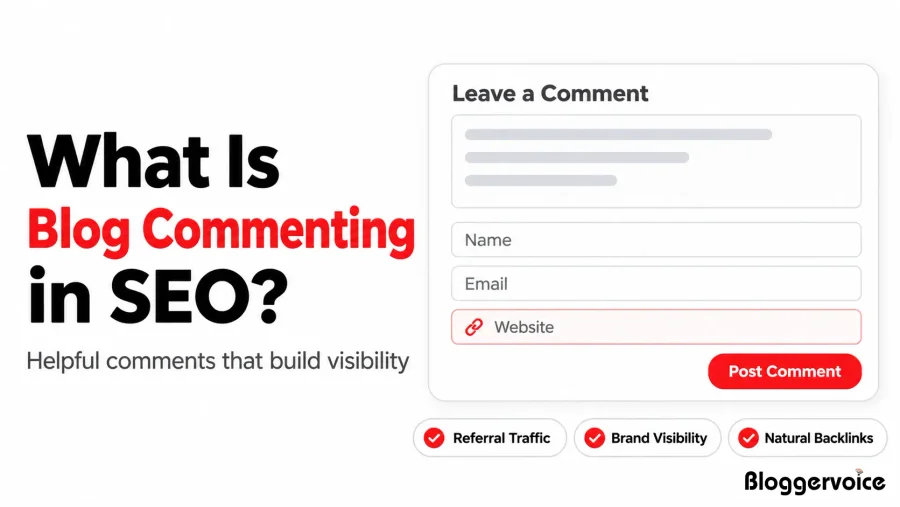
When you comment, most blogs ask for three things:
- Your name, which should be your real name or brand name
- Your email, which isn’t shown publicly
- Your website, which turns your name into a link
That link is your comment backlink. On its own it doesn’t pass much ranking power, but it does help people find you, and it adds variety to your backlink profile.
Blog commenting works best as one part of a bigger off-page plan. Our SEO guide shows how it fits with your other SEO tasks.
For new posts on your own blog, a short ping list for WordPress helps them get discovered sooner.
How To Do Blog Commenting?
Find active blogs in your niche, read the post fully, comment with your real name, add a helpful insight or question, and use the website field for your link.
Shortlist Relevant Blog Commenting Sites
Build a niche focused blog comments list by selecting active blog comment sites with real discussions. Avoid websites with high spam scores, as they reduce approval rates and SEO value.
Read and Analyze the Blog Post
Carefully understand the content, tone and audience before commenting. Blog commenting site owners prefer comments that show real engagement.
Use Genuine Identity While Commenting
Comment using a real name or your brand identity. Authentic profiles gain more trust on blog comment sites than fake usernames.
Write Meaningful Blog Comments
Share insights, ask thoughtful questions or add value to the discussion. Keep comments between 50–150 words for the best results.
Submit Comments Properly
Use the website field only for your homepage or brand page. Avoid keyword-stuffed anchor text to maintain credibility.
What Are The Benefits Of Blog Commenting?
Blog commenting brings referral traffic, brand visibility, relationships with bloggers and a natural mix of backlinks.
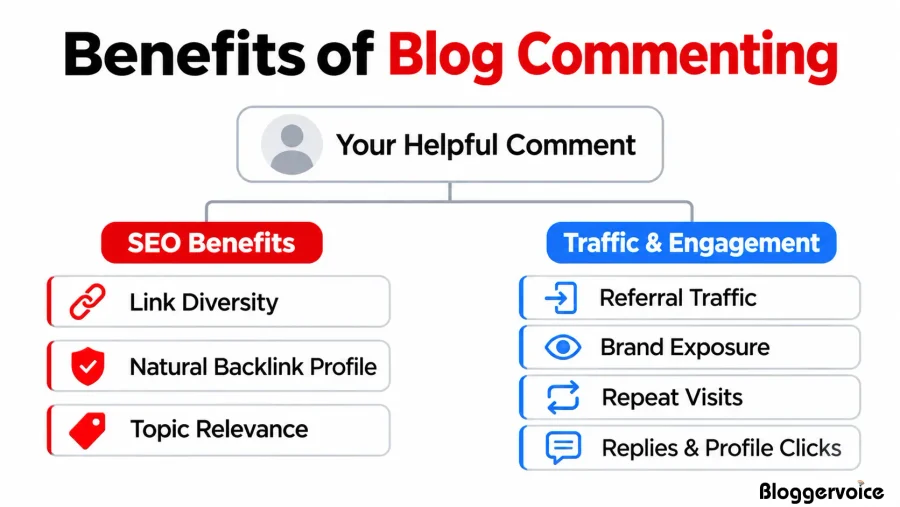
1. The SEO Benefits Of Blog Commenting
- Builds link diversity using free blog commenting sites
Blog commenting for SEO adds variety to your backlink sources when links come from real discussions instead of fixed placements.
Free blog commenting sites help your link profile look natural, not rehearsed like a bad sales pitch.
- Supports natural backlink profiles
Links earned through comments appear naturally inside conversations, which mirrors how real users share websites.
This pattern helps to avoid sharp link spikes that raise red flags.
Mixed with editorial links, guest posts and profile backlinks, they help you avoid patterns that look forced.
- Helps search engines connect your brand with relevant topics
When your comments appear on niche blogs, search engines associate your site with that topic cluster.
Repeated visibility inside the same subject area helps clarify what your website talks about. This context matters more than raw link count in 2026 ranking systems.
These links carry more weight because they sit inside clean, moderated content.
Publishing short posts on Web 2.0 sites around the same topic strengthens this connection.
2. Traffic and Engagement Benefits of Blog Commenting Websites
- Referral traffic from blog comment sites with real readers
Free blog commenting sites send visitors who already care about the topic you discuss.
These users click because your comment helped them, not because a banner shouted at them.
- Brand exposure through high authority blog commenting sites
Commenting on popular blogs places your name in front of steady readers.
Over time, people start recognizing your brand across multiple posts. Familiar names earn clicks faster than unknown links hiding in footers.
- Repeat visits when users recognize your name
Consistent commenting builds recognition, especially in small niches.
Readers remember voices that explain things clearly and avoid sales talk. That memory brings repeat visits without paid ads or awkward follow-ups.
- Comments that add value attract replies and profile clicks
Helpful comments invite replies, likes and discussion threads.
Each interaction keeps your name visible longer on the page. Curious readers often click your profile to see what else you wrote, which sends warm traffic to your site.
What Are The Different Types Of Blog Commenting Sites?
There are 4 main types of blog commenting sites: dofollow, nofollow, high authority and instant approval blog commenting sites.
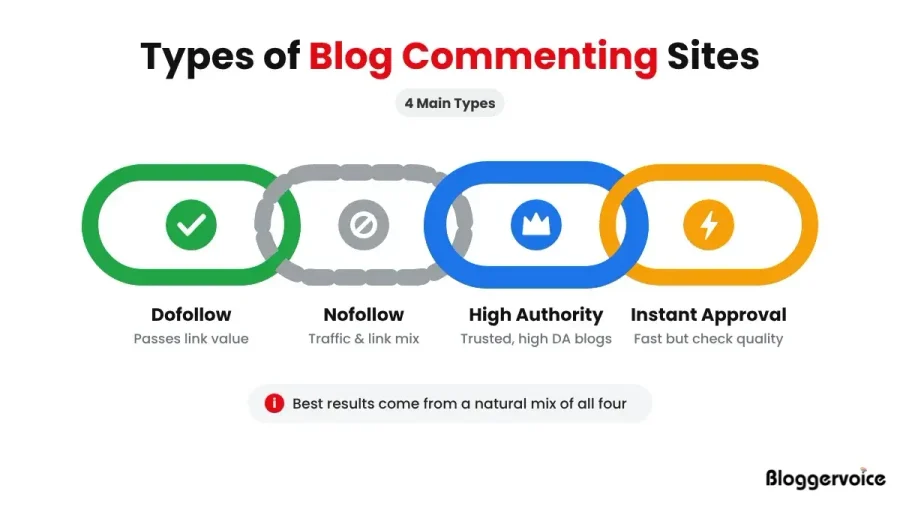
1. Dofollow Blog Commenting Sites
Dofollow commenting sites allow search engines to follow links added in comment profiles or names.
These links matter when blogs show real traffic, active discussions, and manual moderation.
Use them carefully, since poor sites can damage trust faster than they help rankings.
A regular SEO audit helps you spot low-quality links pointing to your site.
2. Nofollow Blog Commenting Sites
Nofollow blog commenting still plays a role in modern SEO.
Search engines expect a mix of followed and unfollowed links across websites.
These comments also send referral traffic and help your backlink profile avoid patterns that look forced.
3. High Authority Blog Commenting Sites
High PR blog comments come from trusted domains with strong link histories.
Choose blog commenting sites with high DA-PA that attract real readers and regular discussions.
Inflated metrics without traffic rarely help and often signal poor quality.
4. Instant Approval Blog Commenting Sites
Instant approval blog commenting sites list comments without manual review, which speeds posting but invites spam.
Use these sites only after checking comment quality and recent activity. A quick approval means nothing if readers stopped visiting years ago.
Are There Instant Approval Blog Commenting Sites?
Yes, some blogs approve comments instantly, but most trusted blogs review your first comment before it goes live.
In WordPress, the default setting approves a commenter automatically once they’ve had one comment approved before. So the real way to get instant approval is to leave a genuinely helpful first comment. After that, your future comments on that blog usually appear straight away.
Blogs that use systems like Disqus can also publish comments instantly, while their spam filters check them in the background.
Be careful with an instant approval blog commenting sites list that promises no moderation at all. Blogs that approve everything are usually filled with spam, and a link from them adds little value and can hurt your brand.
Moderation is a good sign, not an obstacle. A blog that reviews comments keeps its discussions clean, and that’s exactly the kind of place where your comment gets noticed.
What Does a Good Blog Comment Look Like?
A good blog comment refers to something specific in the post and adds a new idea, example or question.
Bad comment:
Nice post, very informative. Thanks for sharing!
Good comment:
Great point about checking a blog’s recent activity before commenting. I tried this last month and found that blogs where the author replies to comments sent far more visitors than bigger blogs that never respond. Do you think author replies matter more than DA when choosing where to comment?
The good comment shows you read the post, adds a real experience and invites a reply. That’s what gets approved, and what gets clicks.
If a comment turns into a bigger idea, expand it into a full post and share it on free blog submission sites.
How to Choose Blog Commenting Sites by Niche?
Choose blogs that match your industry, so your comments reach the right readers and connect your brand with the right topic.
- Education: Comment on learning, edtech and study-tip blogs. Share a study method or explain a concept clearly. This suits tutors, coaching centers and course creators. You can also turn a study guide into a free download on PDF submission sites.
- Beauty and wellness: Comment on skincare, beauty and lifestyle blogs. Share honest experiences and keep the tone friendly and personal. Sharing before-and-after photos on image submission sites can bring extra visibility too.
- Health and hospitals: Comment on general health awareness and wellness blogs that allow reader comments. Stick to public information and avoid medical claims or personal advice.
- Real estate: Comment on property blogs and local housing news. Agents and builders can share local market insights to reach buyers researching an area.
- Marketing and SEO: Comment on blogs like Neil Patel, ProBlogger and Blogging Wizard, and share real results and tests, not general praise. If you’re new to blogging, our list of blogging resources also covers the tools that help you write better, rank higher and grow faster.
- Tech and development: Comment on DEV Community, Smashing Magazine and WP Tavern. Add code tips, fixes or alternative approaches.
Are There Instant Approval Blog Commenting Sites?
Yes, some blogs approve comments instantly, but most trusted blogs review your first comment before it goes live.
In WordPress, the default setting approves a commenter automatically once they’ve had one comment approved before. So the real way to get instant approval is to leave a genuinely helpful first comment. After that, your future comments on that blog usually appear straight away.
Blogs that use systems like Disqus can also publish comments instantly, while their spam filters check them in the background.
Be careful with an instant approval blog commenting sites list that promises no moderation at all. Blogs that approve everything are usually filled with spam, and a link from them adds little value and can hurt your brand.
Moderation is a good sign, not an obstacle. A blog that reviews comments keeps its discussions clean, and that’s exactly the kind of place where your comment gets noticed.
What Are The Common Blog Commenting Mistakes To Be Avoided?
Here are the common blog commenting mistakes to be avoided.
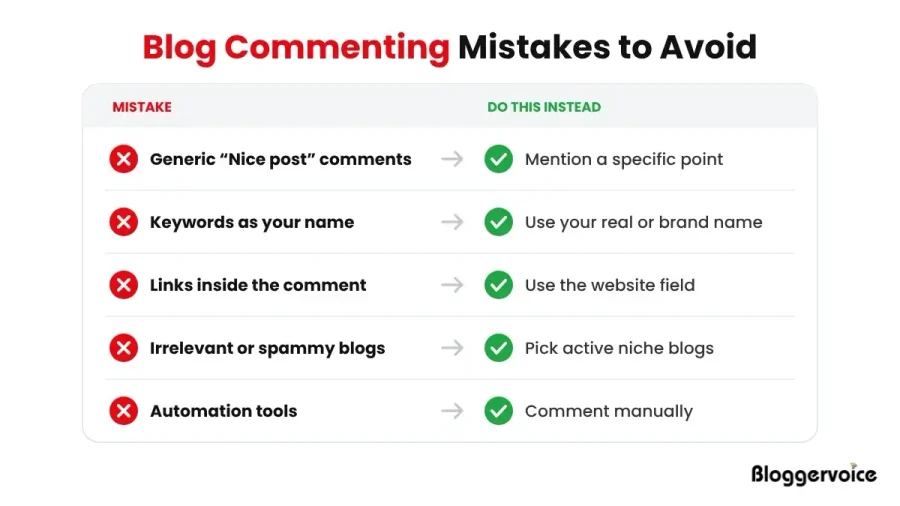
1. Posting One-Line or Generic Comments
Comments like “Nice post” or “Great article” add zero value to the blogs that’s why blog owners delete them quickly and readers scroll past without a second glance.
Instead of this reference a specific point, answer a question or add a short insight as relevance matters more than word count.
2. Using Keywords as Names
Usernames such as “Best SEO Services in USA” instantly trigger spam filters so most moderators remove them without reading the comment.
To avoid such removal use a real name or a genuine brand name as trust begins with sounding human, not robotic.
3. Dropping Links Inside the Comment Text
Most blogs automatically block links in the comments. Even when links slip through, they look forced and reduce credibility.
Use the designated website or profile field for links and let readers click because they’re interested, not because a link was pushed at them.
4. Commenting on Irrelevant or Spammy Blogs
Commenting on low-quality or abandoned blogs damages your brand digital footprints because search engines track patterns, not just links.
Focus on blogs with active discussions, real readers and consistent content updates.
5. Over-Automation and Footprint Creation
Automation tools leave obvious trails like repeated phrases, identical comments and predictable posting behavior and this pattern is observed by the blog owners frequently which ultimately damages your brand’s online goodwill.
Manual commenting takes more effort, but it builds authentic visibility and avoids cleanup work later as the quality always beats speed.
What Are The Different Goals Of Blog Commenting?
1. Blog Commenting for SEO
- Link diversity and natural profiles
Blog commenting for SEO helps spread backlinks across different domains instead of piling them on one source.
Free blog commenting sites add contextual mentions that sit beside genuine content, not stuffed pages. Search engines read this mix as normal behavior, not manipulation, which keeps rankings steady instead of jumpy.
- Supporting content promotion strategies
Blog commenting for SEO works best when comments point readers toward useful pages, not sales funnels.
When you comment on related posts soon after publishing new content, crawlers find and index those pages faster. Saving your new post on social bookmarking sites helps it get discovered even sooner.
A smart comment acts like a quiet tap on the shoulder, not a loud sales pitch.
2. Blog Commenting for Traffic
- Selecting blogs with active readers
Traffic from blog commenting websites depends more on readers than on metrics like DA.
Blogs with fresh posts, recent comments, and author replies send visitors who actually read pages.
Pick blogs where comments spark replies, not where silence lives like an awkward party guest.
- Comment placement timing
Timing matters when blog commenting for traffic. Early comments on new posts stay visible longer and pull more clicks over time.
Comments added within the first 24 to 48 hours often sit near the top, which improves profile views.
This small timing move can send steady traffic without chasing trends or posting daily.
3. Blog Commenting for Brand Awareness
- Voice consistency and expertise display
Blog commenting for brand awareness works when your tone stays steady across blogs.
Readers start recognizing names that sound helpful, clear, and human every time.
When your comments explain ideas simply, readers remember you even without clicking links.
- Becoming a recognizable contributor
Regular comments on the same topic build familiarity faster than random posting. When readers spot your name across several posts in one niche, trust grows naturally.
This recognition leads to profile clicks, repeat visits, and mentions on social platforms. You do not chase attention here; attention starts noticing you.
What Is The Future of Blog Commenting?
Blog commenting is moving toward quality, as AI spam filters block low-value comments and reward helpful, expert replies.
Here is a quick glance of the future of blog commenting:
1. AI moderation and comment quality filters
The future of blog commenting focuses on quality checks powered by machine learning systems.
Platforms now scan comments for relevance, intent, and spam patterns before approval. Google and large publishers already rely on automated moderation to remove low value inputs.
This shift rewards thoughtful comments and quietly blocks shortcut tactics.
2. Shift toward expertise-driven engagement
Blog commenting now favors people who add real insight instead of surface level praise.
Search engines and publishers both prefer comments that explain, question, or expand the topic.
Readers follow voices that sound informed, not promotional.
3. Blog commenting as a branding signal
Blog commenting acts as a branding signal when names appear consistently on trusted blogs.
Repeated exposure builds recall even without direct clicks.
Conclusion: Is Blog Commenting Still Worth It in 2026?
Yes, blog commenting is still worth it in 2026, as long as you use it to build relationships and visibility, not just to collect links.
Comment links won’t push your site to page one on their own. What they do well is put your name in front of the right readers, start conversations with bloggers in your niche and add natural variety to your backlinks.
Start small. Pick 10 active blogs in your niche, leave one thoughtful comment a day, and reply when people respond. Do that consistently, and blog commenting becomes a simple, steady part of your SEO.
FAQs About Blog Commenting Sites
Is blog commenting good for SEO?
Yes, when it’s done naturally. Blog commenting brings referral traffic, brand visibility and backlink diversity, but spammy comments can hurt your brand.
How do I find blog commenting sites in my niche?
Search Google for your keyword plus “leave a comment” or “post a comment”, then shortlist blogs with recent posts and active discussions.
How long should a blog comment be?
Aim for 50–150 words. That’s long enough to add value but short enough that people will read it.
How many blog comments should I post a day?
1–2 thoughtful comments a day is plenty. Quality and relevance matter far more than volume.
Can blog commenting get my site penalized?
Spammy blog commenting can. Google’s spam policies list comments with optimized links as link spam, so avoid keyword names, bulk tools and irrelevant blogs.
